Customize your writing space.
Four choices: the page behind your words, the typeface, the room, and the sound. Same paragraph in each, so you can see what changes.
1. The page behind the words
Bottom left, press Aa. The right column is Page: None, Clear, White, Ruled.
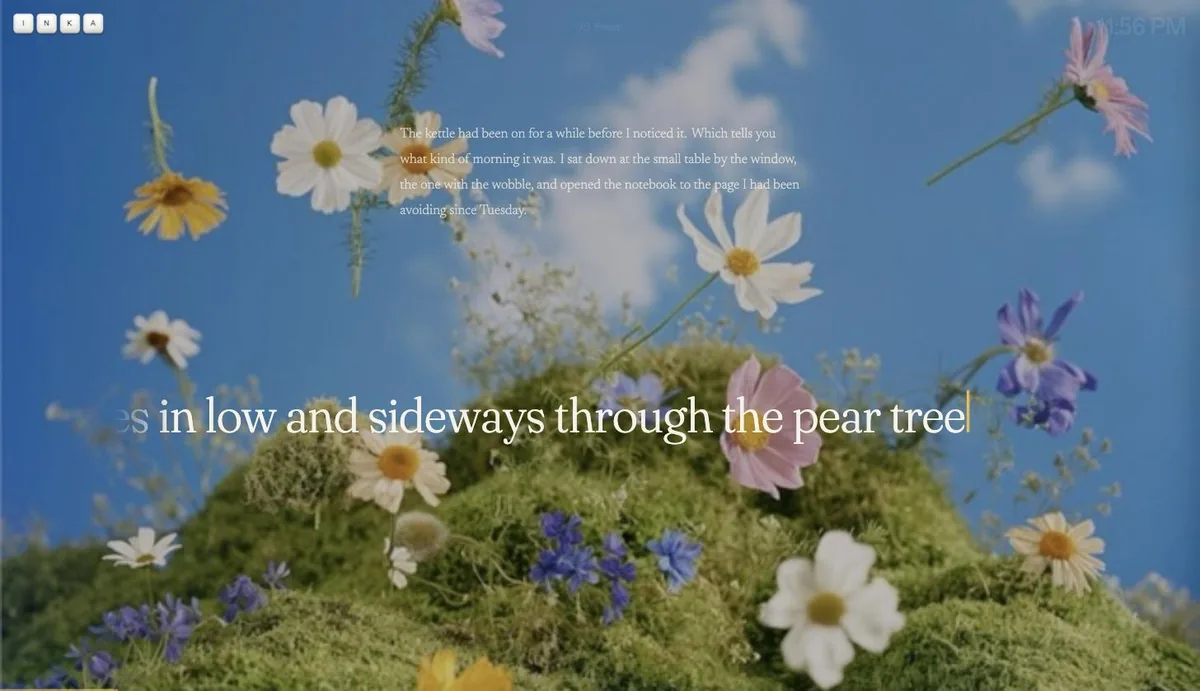
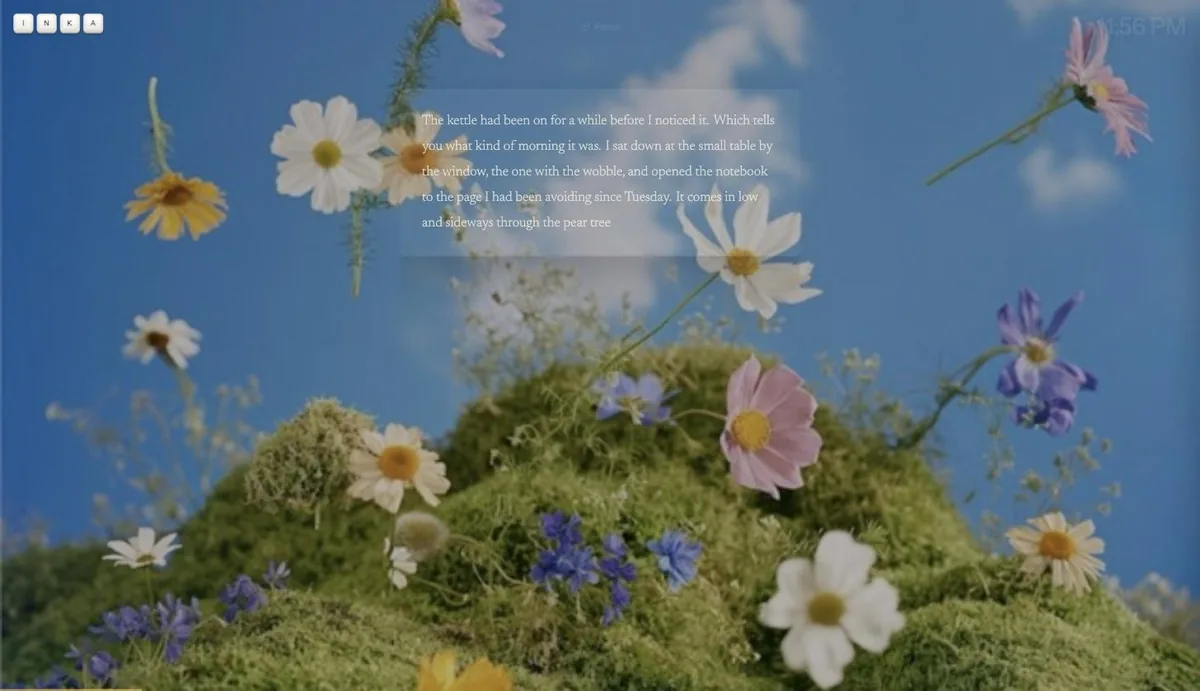
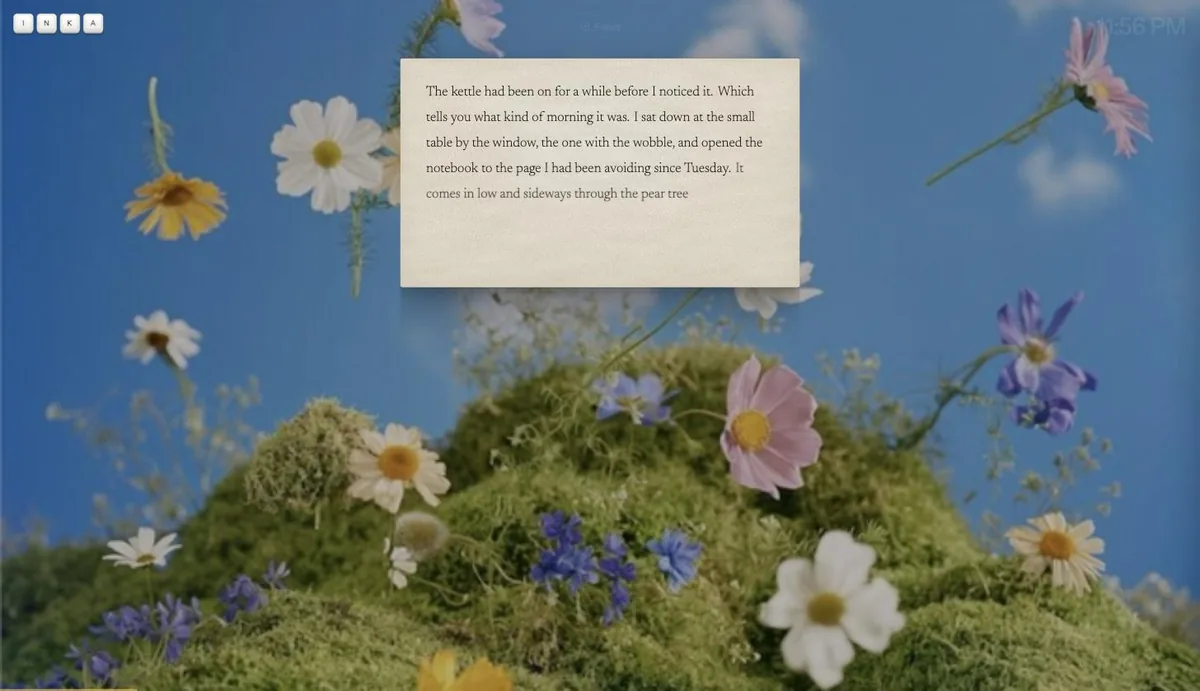
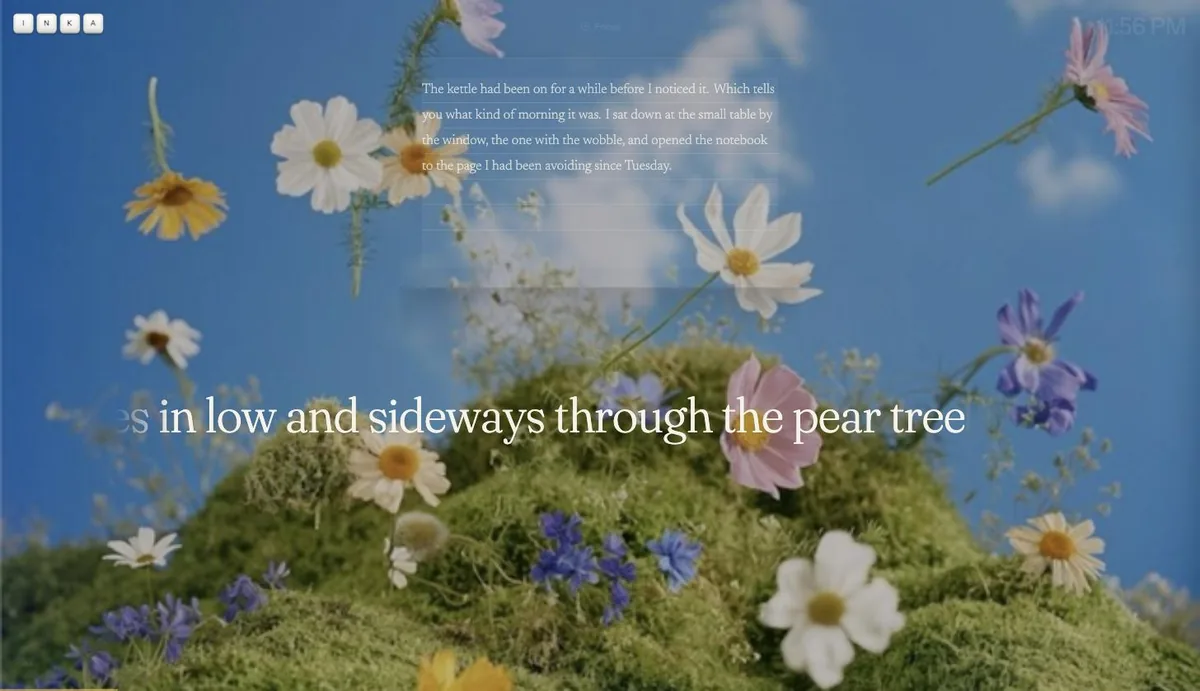
On White and Clear the line you are typing moves up into the page. On None and Ruled it stays large at the bottom and settles into the page when you pause or press Enter.
2. Typeface
Same Aa button, left column: Serif, Sans, Mono, Atkinson. Serif is the default.
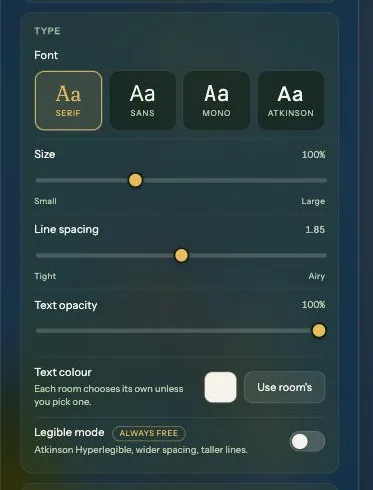
- Legible mode switches to Atkinson Hyperlegible with wider letter spacing and taller lines. It is free and stays free. If you have dyslexia or just find dense text tiring, try it before anything else.
- Text colour follows the room unless you pick one. Use room's puts it back.
- Auto-settle after a pause is here too: how long Inka waits before a sentence settles. 3 seconds by default. Enter always settles at once.
3. The room
Hub, Room. Animated rooms at the top, stills below. Press View all to see every one.
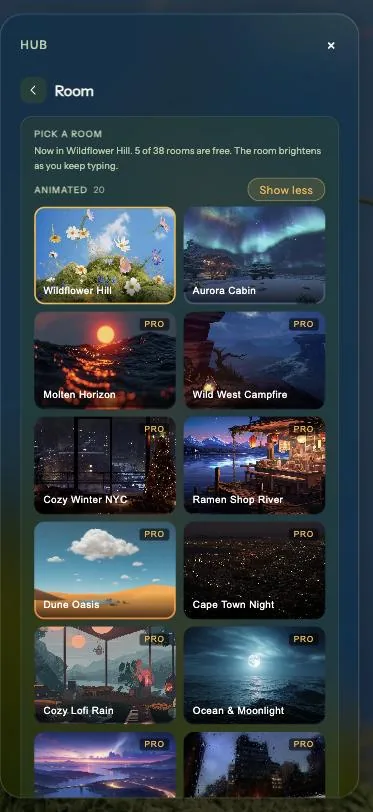
- The room brightens as you keep typing and dims a little when you stall. That is on purpose.
- Each room sets its own text colour and caret colour. Pick a room first, then adjust text.
- Pro: Your own background. Paste an image or YouTube link and it becomes the room. The last five stay in the panel.
4. Sound
Bottom left, the button next to Aa. Tap a sound to start it. Tap another and they play together. Each one gets its own volume slider.
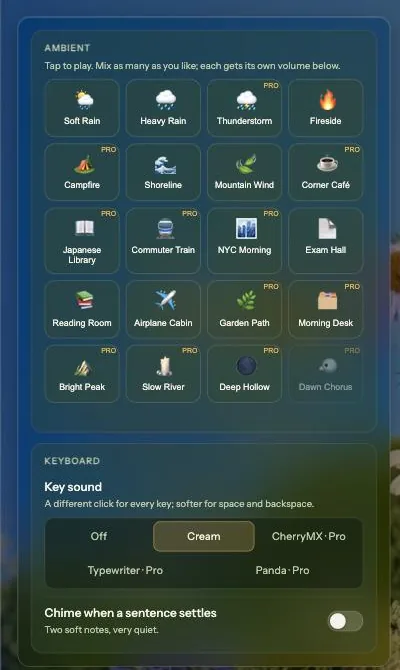
- A mix that works for most people: Soft Rain plus Fireside, rain a little louder.
- Key sound: Cream is free. Off is there too.
- Ambient volume follows your typing the same way the room does.
- Spotify is separate, under Hub, Music. Paste a playlist link. Ambient sounds duck while a track plays.
Where the controls are
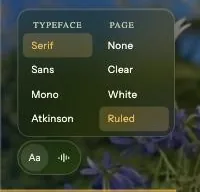
- Aa, bottom left: typeface and page.
- The sound button next to it: ambient mix, key sound, chime.
- The gear, bottom right, opens the Hub: Text, Room, Music, Export and the rest.
- Everything hides after a few seconds without input. Move the mouse and it comes back.
All of this is saved on your device and comes back next time. Rooms, sounds and text settings stay on each device; only your pieces sync when you sign in.